
Table of contents
BlogPublished June 19, 2026 · 20 min read
Last updated:
Drawdown and Recovery for Premium Sellers: Math and Mindset
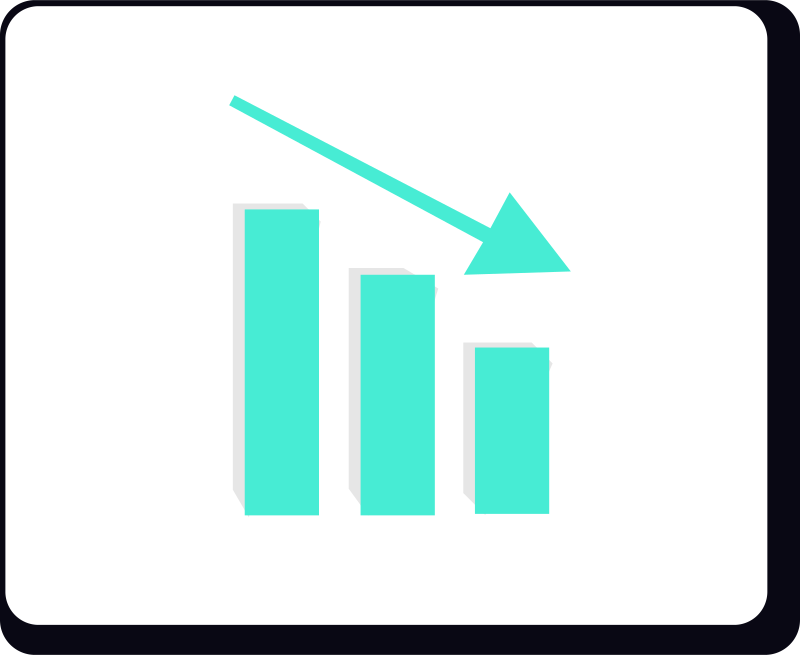
Drawdown and recovery for premium sellers: the asymmetric math of losses, why a 50% drawdown needs a 100% gain back, and the rules that keep a string of wins safe.
Premium selling produces a steady stream of small wins punctuated by occasional sharp losses. That return shape makes drawdowns feel sudden and personal, and the math of recovering from them is harsher than most traders expect.
A drawdown is the drop from a peak in account value to a trough. The uncomfortable truth is that gains and losses are not symmetric: the deeper the hole, the disproportionately larger the gain needed to climb out.
This guide covers drawdown and recovery for premium sellers: the asymmetric math, why the seller's win-often profile breeds overconfidence, and the rules, and mindset, that keep a long string of wins from ending in one unrecoverable loss. This is education, not investment advice.
You will learn the math of a drawdown, why a high win rate hides tail risk, and how it connects to expectancy vs. win rate.
The asymmetric math of losses
Losses and gains do not offset one-for-one. Lose 10% and you need 11% to get back; lose 50% and you need a full 100% gain just to break even. The deeper the drawdown, the more brutal the climb, because you are now compounding from a smaller base.
Drawdown vs. gain needed to recover:
- −10% → +11% to recover
- −25% → +33%
- −50% → +100%
- −75% → +300%
For a premium seller earning, say, 2% a month, a 50% drawdown is not a few bad months to recover. It can be years. This is why avoiding deep holes matters far more than maximizing returns in good times.
The dimension nobody prices: time
The percentage table is the well-known half. The half that actually determines whether a seller keeps going is how many months of flawless trading the recovery consumes, because during all of them, you are working to get back to where you already were.
| Drawdown | Gain required | At 1% / month | At 2% / month | At 3% / month |
|---|---|---|---|---|
| -10% | +11% | ~11 months | ~6 months | ~4 months |
| -20% | +25% | ~23 months | ~12 months | ~8 months |
| -30% | +43% | ~36 months | ~18 months | ~12 months |
| -50% | +100% | ~70 months | ~35 months | ~24 months |
Read the -30% row against a realistic 2% monthly return: eighteen consecutive positive months, with no further losses, to arrive back at breakeven. Premium selling does not produce eighteen consecutive positive months on demand, so in practice the recovery is longer still, and it is spent entirely on ground you had already covered.
This is the real argument against optimising for return. Moving from 2% to 3% a month is a 50% improvement in good times; taking a 30% drawdown instead of a 15% one costs roughly two years. The asymmetry is so large that sizing dominates every other decision a seller makes.
Why the seller's profile breeds overconfidence
Selling premium wins most of the time. A run of 20 or 30 winning trades feels like skill and tempts you to size up, right before the move that takes back months of gains. The high win rate is real, but it disguises a return distribution with a long, thin, painful tail.
The psychological traps:
- A win streak feels like mastery and invites oversizing
- Small steady gains anchor you to a too-rosy expectation
- One large loss can erase many wins, and your confidence with it
- After a loss, revenge-sizing turns a drawdown into a disaster
This is the lived version of why 90% wins can still lose: the win rate is not the edge, the full distribution is. The matching errors are catalogued in common mistakes option sellers make, and the biases behind them in trading psychology for option sellers.
What a seller's drawdown actually feels like
A premium seller's drawdown does not arrive as a slow decline. It arrives as several things failing at once, in a way that a stock portfolio's drawdown does not, and knowing the sequence in advance is most of the defence.
The mechanics, roughly in order:
- Correlation goes to one: positions that looked independent all move together
- Implied volatility spikes, so every open short option is marked at a loss simultaneously, including ones that will still expire worthless
- Buying back becomes expensive precisely because IV is high: the exit is priced against you
- Rolling collects more credit than usual, which makes deferring the problem feel like solving it
- Collateral is fully committed, so there is no cash to defend with
- In a margin account, requirements rise as prices fall: a call can arrive while you are still deciding
The fourth point is the trap specific to this strategy. In a spike, rolling out and down genuinely pays better than usual, so the seller who rolls everything feels clever rather than exposed, right up to the point where the entire book has been pushed into one distant expiration at strikes that were never re-underwritten (how to roll options, defensive adjustments when short puts go ITM).
The second point is worth separating from the rest, because it is mostly noise: a vega-driven mark-to-market loss on a position that is still well out of the money is not a realised loss, and reacting to it as though it were is how sellers close good positions at the worst prices (IV rank and implied volatility, margin calls and maintenance margin).
Rules that keep the hole shallow
Because recovery math is so unforgiving, the entire game is keeping drawdowns survivable. That is a sizing-and-rules problem, decided before the loss, not a reaction to it.
Practical drawdown defenses:
- Size so no single trade can lose more than a small percent of the account
- Prefer defined-risk structures so the worst case is known in advance
- Cap correlated exposure so one move can't test the whole book
- Keep a cash cushion for the correlated bad day, not the average one
- Set a maximum drawdown that triggers de-risking, written down ahead of time
Sizing is the master control. See position sizing and max collateral, and correlated exposure is the silent multiplier, covered in correlation and sector concentration.
Recovering without compounding the mistake
Once in a drawdown, the instinct to "make it back fast" is exactly what deepens it. Recovery is about returning to your process at normal or reduced size, not doubling exposure to claw back losses on a shorter timeline.
Recovering sanely:
- Reduce size after a loss: don't increase it to recover faster
- Return to your standard, rules-based trades
- Review the journal to see whether process or variance caused the loss
- Let small, repeatable wins compound back: slowly is fine
A journal is what separates a normal variance drawdown from a process failure: if your rules held and you still lost, that is the cost of doing business; if they didn't, fix the process. See why keep an options trading journal. Tracking maximum drawdown as a standing metric, rather than noticing it only when it hurts, is part of the same discipline (the monthly options review).
Watch also for the opposite failure. After a bad drawdown many sellers overcorrect into paralysis: cutting size to irrelevance or stopping altogether at the exact moment implied volatility, and therefore compensation, is at its highest. Panic and paralysis are the same error wearing different clothes: letting the last outcome set the next decision.
Conclusion: avoid the hole, don't just climb out
Key takeaways:
- Gains and losses are asymmetric: a 50% loss needs a 100% gain
- A high win rate hides a long, painful tail
- Size and defined risk keep drawdowns survivable
- Recover by reducing size and returning to process, not revenge trading
Educational only, not personal financial advice. More in the blog · Request access.
Frequently asked questions
- What is a drawdown in trading?
A drawdown is the decline from a peak in account value to a subsequent trough, usually expressed as a percentage. It measures how much you were down from your high-water mark before recovering.
- Why does a 50% loss need a 100% gain to recover?
Because the gain is calculated from a smaller base. If $100 falls to $50, that $50 must double, a 100% gain, to return to $100. The deeper the drawdown, the more disproportionate the recovery required.
- Why are premium sellers prone to deep drawdowns?
Selling wins most of the time, which breeds overconfidence and oversizing right before a sharp move. The high win rate disguises a return distribution with a long, painful tail. See expectancy vs. win rate.
- How do option sellers limit drawdowns?
Size so no single trade risks more than a small percent of the account, prefer defined-risk structures, cap correlated exposure, keep a cash cushion, and set a written maximum drawdown that triggers de-risking.
- How should I trade after a big loss?
Reduce size, return to your standard rules-based trades, and let small repeatable wins compound back. Increasing size to recover faster, revenge trading, is what turns a drawdown into a disaster.
- How long does it take to recover from a drawdown?
Far longer than the percentage suggests. At a realistic 2% a month, a 20% drawdown needs about twelve consecutive positive months and a 30% drawdown about eighteen, with no further losses along the way. Since premium selling does not deliver eighteen flawless months on demand, real recoveries run longer still.
- Why do all my positions lose money at once in a selloff?
Two effects combine. Correlation rises, so names that looked independent move together, and implied volatility spikes, which marks every short option at a loss simultaneously, including positions that are still far out of the money and will expire worthless. The second effect is largely mark-to-market noise, and reacting to it is how sellers close good positions at the worst prices.
From blog to product
Request access to the private beta and we will email you after review.
Request accessRelated articles

How to Run a Monthly Options Trading Review
Key takeaway: A repeatable monthly review for option sellers: which numbers to pull, the metrics that actually matter, how to break results down by ticker and strategy, and the questions to answer each month.
Read more
Trading Psychology for Option Sellers: The Biases That Cost You
Key takeaway: Trading psychology for premium sellers: why a 90% win rate distorts judgement, the traps of revenge trading and sunk cost, discipline in drawdown, and rules that survive stress.
Read more
Covered Call ETFs vs. Selling Your Own Calls
Key takeaway: Covered call ETFs versus selling your own covered calls: how the funds work, what the fees and capped upside really cost, tax and control differences, and who each option actually suits.
Read more