
Table of contents
BlogPublished May 19, 2026 · 20 min read
Last updated:
Options Assignment Explained: What Happens When Your Short Put or Call Is Exercised

Options assignment explained for sellers: exercise vs. assignment, short put and short call outcomes, early assignment risks, and six steps to log assignment in your journal.
Assignment is the moment an options trade becomes shares. Sellers who only tracked premium are often surprised by buying power changes, tax lots, and the next leg they must manage.
Exercise and assignment are two sides of the same process: a long holder exercises; the clearing system assigns short positions. American equity options can be exercised any session before expiration.
This guide explains options assignment for put and call sellers: what your broker does, early assignment triggers, and how to record the event so your journal matches reality.
You will learn assignment vs. exercise, outcomes for short puts and short calls, six logging steps, and links to puts, covered calls, and rolls.
Exercise vs. assignment: who does what
Exercise is the long option holder’s choice to use their contract. Assignment is when a short position is selected to fulfill that exercise. Retail sellers rarely choose assignment: it finds them when the contract is in the money and exercise occurs.
The OCC clears standardized equity options; your broker applies shares and cash to your account per their rules and notifications.
Terms to keep straight:
- Long option: may exercise (American) before or at expiration
- Short option: may be assigned to fulfill exercise
- Expiration: automatic exercise/assignment rules apply for ITM contracts per exchange procedures
- Assignment notice: broker alert; timing varies by platform
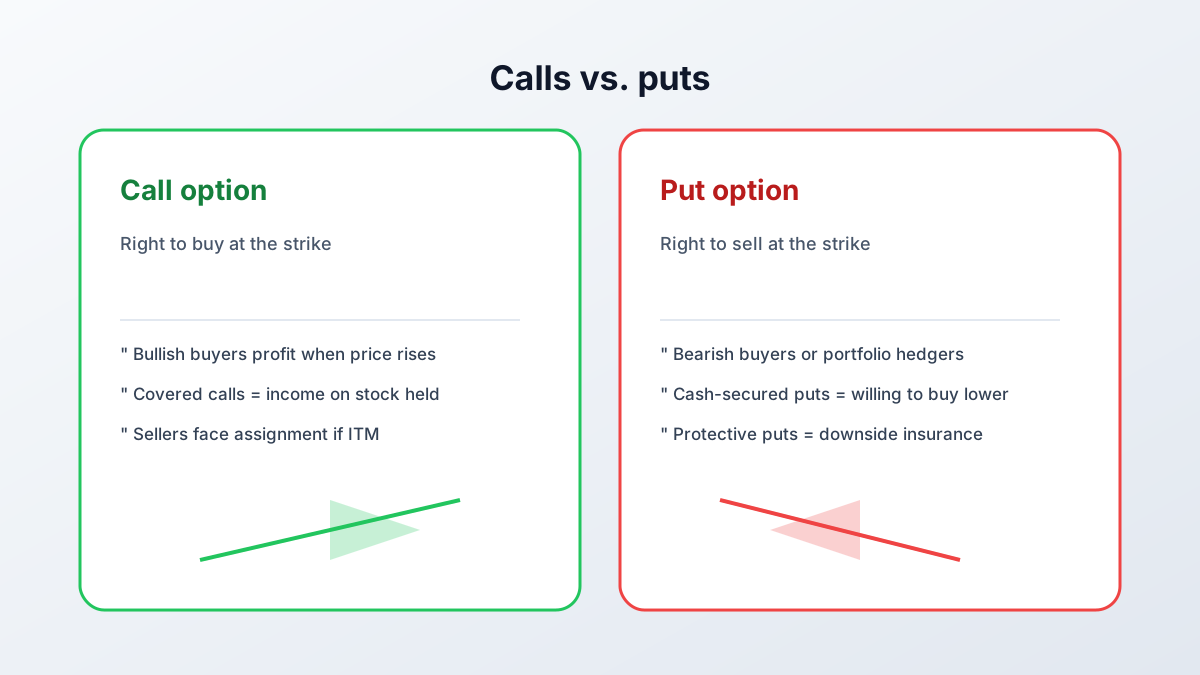
Short put assignment: buying stock
If you are short a put and assigned, you typically buy 100 shares per contract at the strike. Cash-secured puts used reserved collateral; margin puts may use borrowing. Your effective cost is approximately strike minus premium received (per share, before fees).
This is the core risk in selling puts with discipline: assignment is often the intended outcome for wheel traders, not a failure.
After short put assignment, check:
- Share count and average cost in the broker
- Buying power and collateral released or reallocated
- Whether you will sell covered calls or hold stock
- Tax lot and holding period for the new shares
Short call assignment: selling stock
Short naked calls without stock are dangerous: assignment can force buying shares at market to deliver. A covered call assignment delivers your long shares at the strike; you keep premium and often realize gain or loss on stock versus your basis.
Covered calls explained details payoff when called away.
Early assignment: dividends and deep ITM options
Early assignment happens before expiration, often around ex-dividend dates on ITM calls (holders capture dividend) or when puts are deep ITM with little extrinsic value left. Pin risk near expiration can also trigger last-minute exercise.
Early assignment watchlist:
- ITM calls with dividend > remaining extrinsic value
- ITM puts with tiny time value near expiration
- Earnings gaps that suddenly deep ITM your short options
- Low liquidity names with wide spreads at expiry
Options expiration week covers pin risk and calendar management.
How likely is assignment? The extrinsic value rule
Rational holders rarely exercise early while meaningful extrinsic value remains: exercising throws that value away, since selling the option collects more than exercising it. That gives sellers a practical rule of thumb: early assignment risk becomes real when your short option's remaining extrinsic value is close to zero.
Dividend example: you are short an ITM call, the stock pays a $0.60 dividend tomorrow (ex-date), and the call has $0.25 of extrinsic value left. A holder who exercises today captures $0.60 of dividend and forfeits $0.25 of time value, a $0.35 profit per share. Expect assignment. Flip the numbers ($0.25 dividend, $0.60 extrinsic) and exercising loses money, so it rarely happens (early assignment on covered calls and dividends walks the full checklist).
| Situation | Extrinsic left | Assignment risk |
|---|---|---|
| OTM, any DTE | All of the premium | Very low |
| ITM, 30+ DTE | Usually meaningful | Low |
| ITM, dividend tomorrow > extrinsic (calls) | Less than the dividend | High |
| Deep ITM put, < 1 week, pennies of time value | Near zero | High |
| ITM at expiration | Zero | Near certain (auto-exercise) |
Assignment and taxes: what happens to your basis
Assignment does not create a separate taxable event for the option: the premium folds into the stock trade. On an assigned short put, the premium received reduces your stock cost basis (strike − premium). On a called-away covered call, the call premium is added to your sale proceeds. Your holding-period clock for the shares starts at assignment, not when you sold the put.
This matters for year-end reporting: brokers handle the basis adjustments on official forms, but your own journal should mirror them or your P&L will drift from your 1099. See taxes on option selling and IRS Publication 550 for the authoritative treatment: and confirm specifics with a tax professional.
6 steps to log assignment in your journal
Six steps the day of assignment:
- Screenshot or export broker confirmation
- Close the option leg in your journal with assignment flag
- Open or update stock position with correct share count
- Recalculate collateral and buying power for next trades
- Note thesis: hold, sell call, or exit stock
- Set reminder for next expiration on new option legs
Why keep an options trading journal? explains ongoing fields for rolls and stock.
Conclusion: assignment is a feature, not a glitch, if you planned for it
Options assignment is how short premium becomes stock risk. Sellers who document assignment the same day keep their wheel, collateral math, and tax story coherent.
Educational only, not tax or legal advice. Confirm procedures with your broker and FINRA resources.
Frequently asked questions
- What is options assignment?
Assignment is when an option seller must fulfill the contract: buy stock on a short put or deliver stock on a short call when the buyer exercises. American options can assign before expiration.
- What happens when a short put is assigned?
You buy 100 shares per contract at the strike price. Effective cost is approximately strike minus premium received. Plan for this outcome before you sell the putselling puts guide.
- What happens when a short call is assigned?
You deliver 100 shares per contract at the strike. On a covered call, shares come from your long stock. On a naked call, you must buy shares in the market, often urgent and costly.
- Can options be assigned early?
Yes: American equity options can be exercised early, often around dividends (calls) or deep ITM puts. Early assignment is normal, not a platform errorearly assignment on covered calls.
- How do I log assignment in my journal?
Record date, shares, strike, premium history, and new stock basis the day assignment hits. Link the stock position to the closed option leg for honest monthly reviewsjournal guide.
- How do I know if my short option will be assigned early?
Watch the remaining extrinsic value. Holders rarely exercise while meaningful time value remains, because selling the option pays more. Risk rises sharply when an ITM call's extrinsic drops below an imminent dividend, or when a deep ITM put has only pennies of time value left.
- How is an assigned option taxed?
The premium merges into the stock trade: an assigned put's premium lowers your share cost basis, and a called-away covered call's premium adds to your sale proceeds. The stock holding period starts at assignment. Confirm details in IRS Publication 550 or with a tax professional.
From blog to product
Request access to the private beta and we will email you after review.
Request accessRelated articles

How to Run a Monthly Options Trading Review
Key takeaway: A repeatable monthly review for option sellers: which numbers to pull, the metrics that actually matter, how to break results down by ticker and strategy, and the questions to answer each month.
Read more
Trading Psychology for Option Sellers: The Biases That Cost You
Key takeaway: Trading psychology for premium sellers: why a 90% win rate distorts judgement, the traps of revenge trading and sunk cost, discipline in drawdown, and rules that survive stress.
Read more
Covered Call ETFs vs. Selling Your Own Calls
Key takeaway: Covered call ETFs versus selling your own covered calls: how the funds work, what the fees and capped upside really cost, tax and control differences, and who each option actually suits.
Read more