
Table of contents
BlogPublished May 17, 2026 · 22 min read
Last updated:
Covered Calls Explained: How to Sell Calls on Stock You Already Own

Covered calls explained: learn how to sell calls against long stock, what income and assignment mean, and seven rules before writing your next covered call.
Covered calls are one of the first strategies option sellers learn, and one of the easiest to misuse when position size and assignment are treated as afterthoughts.
You already own shares. Selling a call against them collects premium and caps upside above the strike. That trade-off is simple on paper; in live markets, dividends, earnings, and sudden rallies complicate the picture.
This guide explains covered calls step by step: mechanics, payoff, seven pre-trade rules, and how to log each leg so your book stays honest when shares are called away.
You will learn what a covered call is, how it differs from naked call selling, seven checks before you sell, and links to related guides on puts and journaling.
What is a covered call?
A covered call means you own at least 100 shares of the underlying and sell one call contract against that position. The long stock covers the short call: your broker treats it as defined risk on the call leg because you can deliver shares if assigned.
The CBOE education center and FINRA’s options overview both stress that short calls without stock are a different, and far riskier, profile than covered calls.
Covered call building blocks:
- Long 100+ shares per contract sold
- Short call: you collect premium; buyer may exercise
- If assigned, you sell shares at the strike (usually keep premium)
- Max profit on the combined trade is often capped near strike + premium
Why sell covered calls?
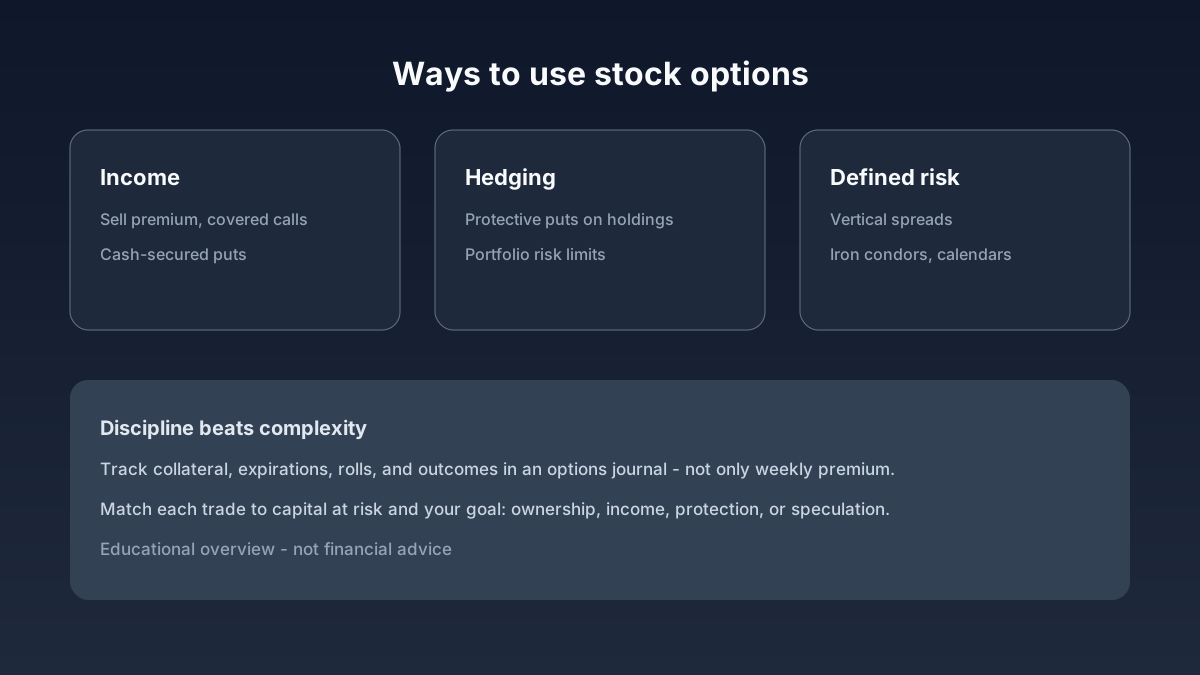
Investors sell covered calls to generate income on stock they already plan to hold, to exit at a target price, or to slightly reduce cost basis over time. You are paid to accept a sale price above today’s market: if the stock cooperates.
Common goals for covered calls:
- Monthly or weekly premium on a core holding
- Willing exit: happy to sell at strike if assigned
- Smoother psychological hold: premium cushions small pullbacks
- Wheel strategy: calls after put assignment (see our wheel guide)
New to calls and puts? Start with what are options and how to take advantage before sizing covered calls.
Payoff, assignment, and what you give up
If the stock stays below the strike at expiration, the call often expires worthless and you keep premium and shares. If the stock finishes above the strike, assignment may deliver your shares at the strike. You keep the option premium but miss upside above that level.
Trade-offs every covered call seller accepts:
- Upside cap: large rallies profit only up to strike (plus premium kept)
- Downside: you still own stock; the call does not hedge a crash
- Dividends: ex-div dates can affect early assignment on ITM calls
- Tax lots: assignment may realize gain on stock you held long term
Assignment mechanics are standardized by the OCC. Log assignment the day it happens: our options assignment guide walks through puts and calls.
A covered call in numbers: three outcomes
The mechanics click faster with real figures. You own 100 shares bought at $48, the stock now trades at $50, and you sell one 30-day call at the $55 strike for $1.20: $120 in premium, since a contract covers 100 shares.
| At expiration | Stock outcome | Call outcome | Your total P&L | What you hold |
|---|---|---|---|---|
| Stock falls to $44 | -$400 unrealised | Expires worthless, keep $120 | -$280 | Still 100 shares |
| Stock flat at $50 | +$200 unrealised | Expires worthless, keep $120 | +$320 | Still 100 shares |
| Stock rises to $55 | +$700 | Expires worthless, keep $120 | +$820 | Still 100 shares: the best case |
| Stock rises to $60 | Capped at $55 | Assigned, keep $120 | +$820 | Cash: shares sold at $55 |
| Stock rises to $75 | Capped at $55 | Assigned, keep $120 | +$820 | Cash: you gave up $2,000 |
Three things are worth reading carefully. Your best outcome is the stock closing exactly at the strike. You keep the shares and the full premium. Above the strike your profit is frozen at $820 no matter how far the stock runs, which is what "capped upside" means in practice. And in the first row, the $120 premium cushioned the decline but did not prevent it: a covered call is not a hedge.
The last row is the one that produces regret, and it is worth deciding in advance how you would feel about it. If a stock running from $50 to $75 while you watch from the sidelines would genuinely upset you, that stock is a poor covered-call candidate: the strategy trades your tail for cash, deliberately (the wheel vs. buy and hold).
7 rules before selling a covered call
Seven pre-trade rules for covered calls:
- I own enough shares (100 per contract) in this account
- I am willing to sell at the strike if assigned
- Earnings and ex-div dates are on my calendar
- The strike matches my exit or income plan, not only max premium
- Total short calls do not exceed shares owned (no naked calls)
- I know my cost basis if assigned (tax planning)
- I logged strike, expiration, premium, and shares in my journal
Why keep an options trading journal? lists fields that make monthly reviews useful.
Choosing strike and expiration
Shorter expirations often mean faster theta decay but less premium per trade. Higher strikes pay less premium but leave more upside. There is no universal best, only fit for your hold period and willingness to sell.
Practical strike and DTE tips:
- 30–45 DTE is a common starting range for many sellers
- Strikes above your cost basis protect against selling at a loss on assignment
- Compare premium to capital tied in stock, not only annualized yield
- Avoid selling calls only because IV spiked without a stock thesis
| Strike | Delta | Premium | Chance of assignment | Upside kept |
|---|---|---|---|---|
| $50 (at the money) | ~50 | $1.90 | Roughly half the time | None: capped immediately |
| $52.50 | ~35 | $1.20 | About one in three | $2.50 per share |
| $55 | ~20 | $0.70 | About one in five | $5.00 per share |
| $60 | ~8 | $0.25 | Rare | $10.00 per share |
The choice is a single dial, not a search for the best strike. Selling the $50 call collects nearly three times the $55 call, and hands over your upside starting today. The right setting depends on which you would regret more: a small premium, or watching the shares leave at $52.50 before a run (choosing strikes by delta and probability).
One structural point that surprises sellers who also sell puts: at the same delta, a call pays noticeably less than a put on the same stock. That is volatility skew: hedging demand bids up downside protection, so the call side of the chain is simply the cheaper side. It is not something you can fix with strike selection, and it means covered-call income should be expected to run below cash-secured put income on the same name.
Put sellers often pair this with selling puts: discipline and capital in a full premium-selling book. If managing strikes and rolls yourself sounds like more work than you want, covered call ETFs vs. selling your own calls compares the fund route against doing it by hand.
Conclusion: covered calls reward clear intent
Key takeaways:
- Covered calls require long stock to cover each short call
- Premium is income; assignment is a planned sale at the strike
- Run seven pre-trade checks; log every leg
- Use a journal to see calls vs. shares across expirations
Educational only, not personal financial advice. Explore Request access or the blog for more guides.
Frequently asked questions
- What is a covered call?
A covered call is a short call option backed by 100 shares of the underlying stock you already own. You collect premium and accept the obligation to sell shares at the strike if assigned.
- What happens if my covered call is assigned?
You deliver 100 shares per contract at the strike price. You keep the premium plus any gain from your stock basis to the strike. Assignment is often a planned exit, not always a surpriseoptions assignment explained.
- What is the maximum profit on a covered call?
Max profit is usually premium plus the difference between your stock basis and the strike (if the stock is above the strike at assignment). Upside above the strike is capped: that is the trade-off for income.
- Can I sell covered calls in an IRA?
Many brokers allow covered calls in IRAs when you hold the shares: no naked short calls. Rules vary by account type and broker; confirm permissions and settlement before trading.
- How do I choose a strike for a covered call?
Pick a strike where you are genuinely willing to sell the stock. Higher strikes collect less premium but leave more upside; lower strikes pay more but increase assignment odds.
- Are covered calls safer than naked calls?
Yes: stock ownership covers the short call, so loss is not theoretically unlimited like an uncovered call. You still face stock drawdown risk; the call only adds premium and caps upside.
- How much money can you make selling covered calls?
On a $50 stock, a 30-day call five dollars out of the money might pay around $0.70 per share: roughly $70 per contract, or about 1.4% of the position for the month. Closer strikes pay more and get assigned more often. What that annualises to depends entirely on how many months the stock cooperates, so treat monthly premium as a range rather than a yield.
- Do covered calls protect against a falling stock?
No. The premium cushions a decline by exactly the amount collected and nothing more. On 100 shares bought at $48, a $120 premium offsets the first $1.20 per share of loss, helpful against a small pullback, irrelevant against a 30% drop. A covered call is an income strategy, not a hedge.
- Why do my covered calls pay less than my cash-secured puts?
Because of volatility skew. Persistent demand for downside protection bids up put implied volatility above equidistant calls, so at the same delta the call side of the chain is structurally cheaper. It is not a strike-selection error: expect covered-call income to run below put income on the same stock, and size your expectations accordingly.
From blog to product
Request access to the private beta and we will email you after review.
Request accessRelated articles

How to Run a Monthly Options Trading Review
Key takeaway: A repeatable monthly review for option sellers: which numbers to pull, the metrics that actually matter, how to break results down by ticker and strategy, and the questions to answer each month.
Read more
Trading Psychology for Option Sellers: The Biases That Cost You
Key takeaway: Trading psychology for premium sellers: why a 90% win rate distorts judgement, the traps of revenge trading and sunk cost, discipline in drawdown, and rules that survive stress.
Read more
Covered Call ETFs vs. Selling Your Own Calls
Key takeaway: Covered call ETFs versus selling your own covered calls: how the funds work, what the fees and capped upside really cost, tax and control differences, and who each option actually suits.
Read more