
Table of contents
BlogPublished June 3, 2026 · 21 min read
Last updated:
SPY vs. SPX vs. Single Stocks for Premium Selling

SPY vs. SPX vs. stocks for selling options: settlement, contract size, liquidity, tax nuances (overview), and how to choose an underlying for your premium-selling account.
Premium sellers often start on single stocks they would own anyway, then hear that SPY or SPX is “better” for income. Better depends on account size, assignment tolerance, tax situation, and whether you want cash settlement or shares in your account.
SPY is an ETF on the S&P 500; SPX is the index itself. Both offer liquid options, but contract specs, settlement, and notional size differ from selling puts on one equity name.
This guide compares SPY, SPX, and single stocks for retail premium sellers, with tables, seven decision factors, and links to collateral and strategy articles.
You will learn settlement style, size per contract, liquidity, wheel compatibility, and when each underlying fits. Tax treatment is only introduced: consult a qualified professional for your situation.
Single-stock options: assignment and the wheel
Selling puts and covered calls on individual equities is the classic retail path. Assignment delivers shares; the wheel strategy runs on stock you are willing to hold. Collateral is often cash-secured at strike × 100 per contract (selling puts).
Pros and cons for sellers:
- Pros: familiar names, dividend stocks for covered calls, defined story per ticker
- Cons: gap risk on earnings, single-name blowups, correlation if you think you are diversified
Event risk: selling options before earnings.
SPY options: ETF liquidity
SPY options are among the most liquid in the world. Spreads are often tight; weeklies and monthlies are abundant. Assignment on short puts delivers SPY shares: 100 shares per contract at the strike, similar mechanics to stock.
SPY seller notes:
- Physical-style settlement via ETF shares on assignment
- Notional per contract = SPY price × 100 (smaller than SPX notional)
- Good for sellers who want index exposure with stock-like assignment
- Still subject to broad market gaps, not company earnings, but macro shocks
CBOE education covers index and ETF products; confirm specs with your broker.
SPX options: cash-settled index
SPX options on the S&P 500 index are often cash-settled: no shares delivered. That changes assignment psychology: you receive or pay cash based on settlement value, not a basket of stock. Contract notional is large (index level × multiplier); position sizing must respect that scale.
SPX seller notes:
- Cash settlement: no SPX shares to own (index is not bought like a stock)
- Often used by experienced sellers with larger accounts and defined-risk structures
- Mini-SPX (XSP) offers smaller notional on some platforms: check listing
- Tax treatment may differ from equity options for US traders: professional advice required
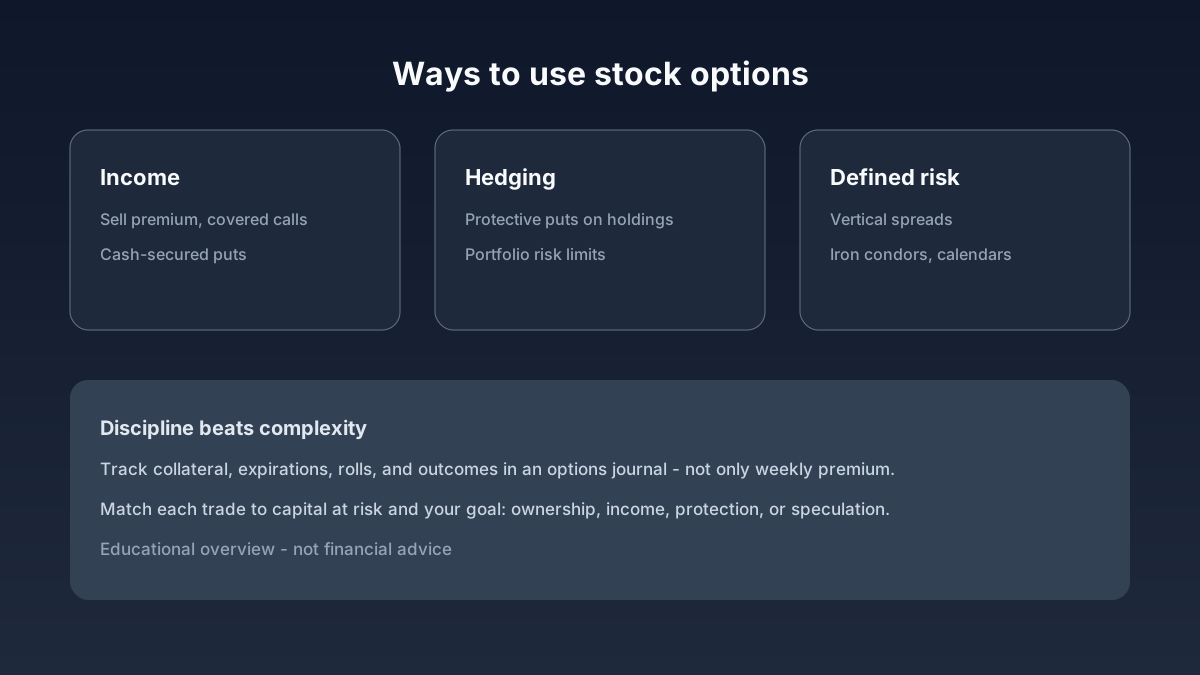
Comparison table (simplified)
| Single stock | SPY | SPX | |
|---|---|---|---|
| Underlying | One issuer | S&P 500 ETF | S&P 500 index |
| Settlement | Shares | ETF shares | Cash |
| Exercise style | American (early possible) | American (early possible) | European (no early assignment) |
| Wheel-friendly | Yes | Yes | No: no shares to hold |
| Liquidity | Varies by name | Excellent | Excellent |
| Main risk | Single-name blowups | Market beta | Market beta |
| Event risk | Earnings gaps | Macro / Fed | Macro / Fed |
| Dividend assignment risk | Yes (short calls) | Yes (SPY pays dividends) | None (cash-settled) |
The capital reality: notional per contract
The comparison most sellers skip is size. One contract controls 100 units of the underlying, so the same “one put” means very different amounts of pledged capital. With the S&P 500 near 6,000 (illustrative):
| Underlying | Price per unit | Notional per contract | Fits a $50k account? |
|---|---|---|---|
| SPX | ~6,000 (index) | ~$600,000 | No: far beyond it |
| XSP (mini-SPX, 1/10) | ~600 | ~$60,000 | Barely: one position |
| SPY | ~600 | ~$60,000 | Barely: one position |
| A $50 stock | $50 | $5,000 | Yes: room for several |
This single line explains most of the debate. A cash-secured SPX put is out of reach for the vast majority of retail accounts, and even one SPY put consumes a whole $50k account's collateral budget. That is why index premium selling in small accounts almost always means defined-risk spreads rather than cash-secured puts (credit spreads vs. naked puts), or the mini XSP contract. Check your cap before assuming an index is the “safer” choice (position sizing and max collateral).
Two structural advantages do favour the index once size is solved: SPX is European-style, so early assignment simply cannot happen, and cash settlement means no shares and no dividend-driven exercise on short calls. In the US, index options may also fall under Section 1256's 60/40 treatment: a genuine difference from equity options, but one to confirm for your own situation (taxes on option selling).
Seven factors to choose your underlying
Ask before your next short option:
- Account size vs. notional per contract
- Do you want to own shares on assignment?
- Comfort with cash settlement math (SPX)
- Need for weeklies / 0DTE vs. 30–45 DTE
- Tax and account type (IRA rules differ: broker dependent)
- Ability to diversify without ten single-name gaps
- Journal can tag underlying type for separate review
Position sizing and max collateral applies to all three. SPX-sized notional is usually not appropriate for very small accounts without defined-risk experience.
Conclusion: match product to process
Single stocks fit sellers who want ownership and the wheel. SPY fits index exposure with ETF assignment. SPX fits experienced sellers who want cash-settled index risk with strict size control. None remove risk: they change its shape.
Educational only, not personal financial or tax advice. See options selling glossary or blog index.
Frequently asked questions
- Should I sell options on SPY or individual stocks?
SPY offers deep liquidity and broad exposure without single-name assignment into one stock. Single names fit the wheel when you want to own specific companies at a strike. Match product to your process and capital.
- What is the difference between SPY and SPX options?
SPY is an ETF (100 shares per contract, stock settlement). SPX is a cash-settled index with different contract size and tax treatment, often used by larger accounts. Confirm multipliers and settlement with your broker.
- Are SPX options cash-settled?
SPX index options are typically cash-settled: no stock assignment, which simplifies expiration for some sellers. SPY options can assign shares like other equity options.
- Which underlying is best for the wheel strategy?
The wheel usually runs on single stocks or ETFs you want to own (e.g. SPY). SPX wheel-style flows differ because of cash settlement and sizing, often an advanced choicewheel strategy.
- Do SPY options have better liquidity than single stocks?
SPY and SPX typically have tighter spreads and more open interest than most single names, useful for entries, rolls, and exits. Illiquid single stocks punish sellers on the bid-ask.
- Can I sell cash-secured puts on SPX with a small account?
Rarely. One SPX contract controls the index × 100, roughly $600,000 of notional with the index near 6,000, so cash-securing it is out of reach for most retail accounts. Smaller sellers use the mini XSP contract, SPY, or defined-risk spreads instead.
- Can SPX options be assigned early?
No. SPX options are European-style and cash-settled, so there is no early exercise and no shares to deliver: the position simply settles in cash at expiration. SPY, being an ETF with American-style options, can be assigned early, including around ex-dividend dates on short calls.
From blog to product
Request access to the private beta and we will email you after review.
Request accessRelated articles

How to Run a Monthly Options Trading Review
Key takeaway: A repeatable monthly review for option sellers: which numbers to pull, the metrics that actually matter, how to break results down by ticker and strategy, and the questions to answer each month.
Read more
Trading Psychology for Option Sellers: The Biases That Cost You
Key takeaway: Trading psychology for premium sellers: why a 90% win rate distorts judgement, the traps of revenge trading and sunk cost, discipline in drawdown, and rules that survive stress.
Read more
Covered Call ETFs vs. Selling Your Own Calls
Key takeaway: Covered call ETFs versus selling your own covered calls: how the funds work, what the fees and capped upside really cost, tax and control differences, and who each option actually suits.
Read more