
Table of contents
BlogPublished June 4, 2026 · 32 min read
Options Selling Glossary: Terms Every Premium Seller Should Know

Options selling glossary from A to Z: assignment, collateral, delta, IV rank, theta, wheel, and 30+ terms with in-depth definitions and links for premium sellers.
Premium selling has its own language: Greeks, rolls, IV rank, cash-secured puts. When two traders use the same word for different things, journals lie and lessons never compound.
This glossary defines terms the way disciplined option sellers use them in practice, with short entries for quick lookup and longer explanations for the concepts you are most likely to search on Google. Each linked guide goes deeper on execution and risk.
Bookmark this page when you import trades, size collateral, or explain your process to yourself six months from now. We refresh definitions periodically as markets and broker rules evolve.
In depth: terms premium sellers search for
IV Rank (IVR): A percentile score showing where current implied volatility sits relative to its past range, often the last 52 weeks on equity options. An IVR of 80 means today's IV is higher than roughly 80% of readings in that window, not that the stock will move 80% more. Options sellers typically look for IVR above 30–50 before opening new short premium, since elevated IV usually means richer credits and more statistical edge for the seller: if your thesis and sizing still make sense. IVR is not the same as raw IV: a stock can have high IV but low rank if volatility has been extreme for months. Full IV rank guide.
Implied volatility (IV): The market's consensus forecast of future movement, reverse-engineered from option prices. When IV rises, premiums tend to expand even if the stock price is flat, helpful for sellers opening new trades. IV is forward-looking and event-sensitive: earnings, FDA dates, and macro shocks can spike IV overnight. Track both level and rank; compare to your own journal of credits collected at different IV regimes. Investopedia: IV.
Delta: Measures how much an option's price tends to change for a $1 move in the underlying, holding other inputs constant. A short put near the money might show delta around −0.30 (30 deltas per contract), meaning roughly stock-like exposure until expiration. Premium sellers use delta to sanity-check direction: selling puts adds positive delta (bullish tilt); covered calls reduce delta on stock you own. Delta accelerates near expiration, gamma territory, so a 'comfortable' OTM strike can behave differently in the final week. Greeks explained · Investopedia: delta.
Theta: Time decay: the rate at which extrinsic value bleeds out of an option as calendar days pass. Short options carry positive theta, you generally benefit if the underlying cooperates and IV does not spike against you. Theta is not linear; it accelerates in the last few weeks before expiration. Many sellers target 30–45 DTE entries to balance premium collected against gamma risk later. Theta helps you; it does not guarantee profit. Theta decay for sellers · Investopedia: theta.
Assignment: When the option seller must fulfill the contract: buying shares on a short put or delivering shares on a short call. With American-style equity options, assignment can occur any time the option is in the money, though early exercise is often linked to dividends on calls or deep ITM puts. Assignment is not always a loss: on a cash-secured put at your intended entry, it completes the plan. The risk is assignment at the wrong size, price, or timing relative to your journal rules. Log assignment dates, basis, and whether you rolled first. Assignment explained · Investopedia: assignment.
Wheel strategy: A structured loop: sell cash-secured puts on a stock you are willing to own; if assigned, hold the shares and sell covered calls; if called away, return to cash-secured puts. Premium is collected at each stage when trades work as planned. The wheel is not passive income. It is concentrated single-name risk with defined steps. Capital, dividend dates, and earnings must fit your rules before you start the cycle. Wheel strategy step-by-step.
Cash-secured put (CSP): A short put with cash set aside to purchase stock if assigned, typically strike × 100 × number of contracts. You collect premium upfront; your obligation is to buy at the strike if the market is below strike at expiration (or if assigned early). CSPs are the entry leg many sellers use for the wheel or for staged stock accumulation. Size them against total account collateral, not just the premium received. Selling puts guide · Investopedia: CSP.
Covered call: A short call backed by 100 long shares per contract. You keep the premium; upside above the strike may be capped if shares are called away. Basis is lowered by premiums collected over time. Covered calls fit income and exit plans on stock you already hold. Watch ex-dividend dates: call holders may exercise early to capture the dividend, removing your shares before you expected. Covered calls explained · Investopedia: covered call.
Credit spread: Sell one option and buy a further OTM option on the same expiration for a net credit. Maximum loss is usually the width between strikes minus credit received: defined risk versus a naked short put. Bull put spreads and bear call spreads are common among sellers who want to cap tail risk. Liquidity on both legs matters; wide markets eat edge. Credit spreads vs. naked puts · Investopedia: credit spread.
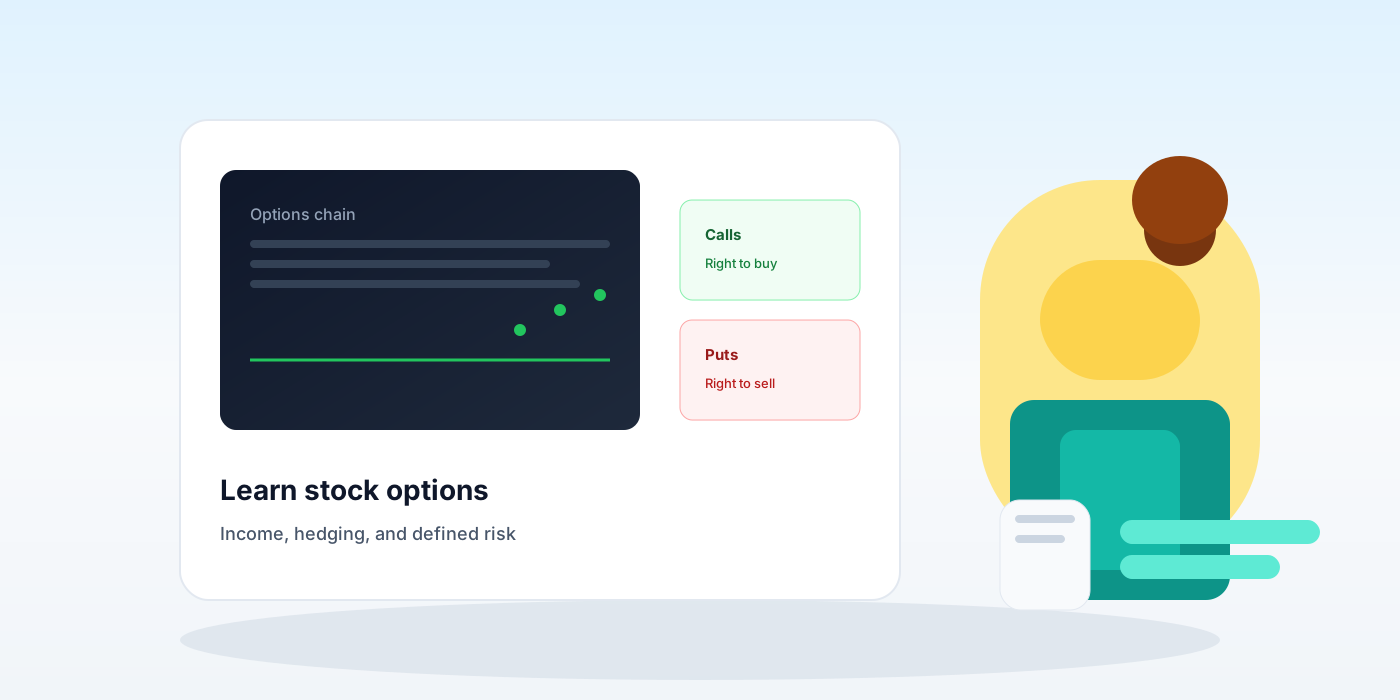
Core contract terms
- Option: A contract: the buyer holds a right, the seller accepts an obligation. Standard equity options control 100 shares per contract. What are options?
- Call: Right to buy at the strike; the short call seller may have to deliver stock if assigned. Sellers use calls in covered strategies or spreads. Investopedia: call
- Put: Right to sell at the strike; the short put seller may have to buy stock if assigned. Cash-secured puts are a common seller entry. Investopedia: put
- Strike: The price at which the option can be exercised. Sellers choose strikes for probability of profit, premium, and collateral.
- Expiration: Last day the option can be exercised under contract rules. U.S. equity options often expire Friday; some products use other schedules.
- DTE: Days to expiration; a key input for theta and roll decisions.
- Contract multiplier: Usually 100 shares per U.S. equity option contract.
- Premium: Price paid for the option; sellers collect premium as a credit when opening. Open premium is not realized P&L until the trade closes. Investopedia: premium
Moneyness and payoffs
- ITM (in the money): The option has intrinsic value; assignment risk rises for short sellers.
- ATM (at the money): Strike near the underlying; high gamma sensitivity.
- OTM (out of the money): No intrinsic value; premium is mostly extrinsic (time and volatility).
- Intrinsic value: Real economic value if exercised immediately.
- Extrinsic (time) value: Premium minus intrinsic; what theta erodes. Sellers are short extrinsic when they open credit trades.
Theta decay for sellers explains time value decay in more detail.
Seller strategies (quick reference)
- Cash-secured put (CSP): See in-depth definition above. Selling puts guide
- Covered call: See in-depth definition above. Covered calls
- Wheel: See in-depth definition above. Wheel strategy
- Credit spread: See in-depth definition above. Credit spreads vs. puts
- Naked short option: Short option without stock or long option cover; higher margin and tail risk than defined-risk spreads.
Lifecycle: assignment, rolls, expiration
- Assignment: See in-depth definition above. Assignment explained
- Early assignment: Exercise before expiration, often around ex-dividend on ITM calls or deep ITM puts. Can remove shares or cash when you planned to hold the option. Early assignment & dividends
- Roll: Close the current short option and open another (different expiry and/or strike). Used to avoid assignment, extend time, or adjust delta for a credit or debit. How to roll
- Expiration week: Final days before expiry; gamma and pin risk rise. Many sellers manage or close before the last session. Expiration week
- Pin risk: Underlying settles near your short strike; uncertain assignment and awkward hedges over the weekend.
Volatility and Greeks (quick reference)
- Implied volatility (IV): See in-depth definition above. Investopedia: IV
- IV rank (IVR): See in-depth definition above. IV rank guide
- IV crush: Sharp IV drop after a known event (e.g. earnings). Can benefit remaining short vega positions but gap risk can overwhelm the vol win. Selling before earnings
- Gamma: Rate of change of delta; spikes near expiration. Short options face accelerating delta swings in the last week. Investopedia: gamma
- Vega, Sensitivity to implied volatility. Short premium is often short vega, you tend to lose if IV rises after entry. Investopedia: vega
- Delta, theta, rho: See in-depth entries; Greeks explained for rho and portfolio context.
Account, collateral, and sizing
- Collateral: Capital reserved against short options; formula depends on strategy (cash, stock, or spread width). Collateral & buying power
- Buying power: What your broker allows for new trades after margin and reserves; can shrink after large assignments.
- NLV (net liquidating value): Total account value used for risk dashboards.
- Cash-secured: Cash earmarked for put assignment at strike × 100 × contracts; not available for other uses until the trade closes.
- Position sizing: How many contracts fit your max collateral and loss rules per ticker and per account. Position sizing
Market structure and tools
- Options chain: Table of strikes, bids, asks, and Greeks by expiration; your starting screen for every sell. Read the chain
- Bid / ask: Executable prices; the mid-quote is not your fill. Wide spreads tax sellers on entry and exit.
- Open interest: Number of open contracts; a liquidity clue alongside volume and bid/ask width. Investopedia: OI
- Volume: Contracts traded today; confirms whether the strike is actively quoted.
- Ex-dividend date: Stock trades without the upcoming dividend; critical for covered call early assignment. Investopedia: ex-div
- SPY / SPX: ETF vs. index options for premium selling; different settlement, margin, and tax treatment. SPY vs. SPX vs. stocks
- Flex Query: IBKR report export for trade history; useful for reconciling assignments and premiums in a journal. IBKR Flex guide
Performance and discipline
- Premium collected: Cash from selling options when trades open; not profit until closes and assignments are fully accounted for.
- Expectancy: Average P&L per trade over a large sample; combines win rate and average win/loss size. Investopedia: expectancy
- Win rate: Percentage of winning trades; misleading alone without average loss and collateral at risk.
- Trading journal: Structured log of entries, rolls, collateral, and rules; separates luck from process. Why keep a journal
- Common mistakes: Recurring process errors sellers document and fix. Common mistakes
- Earnings by account size: Illustrative return bands, not promises. Earnings by account size
Conclusion: learn terms in context
Definitions matter when you review losing months. Use this glossary as a map: the in-depth entries target how people actually search; the lists keep scanning fast during a trade.
Educational only, not personal financial advice. Browse the full blog or try Option Journal for collateral, expirations, and imports.
Frequently asked questions
- What is the difference between IV and IV Rank?
Implied volatility (IV) is the level of expected movement priced into options right now. IV Rank (IVR) is a percentile: where today's IV sits versus its own history (often 52 weeks). You can have high IV but only moderate IVR if volatility has been elevated all year, and the opposite if IV just spiked from a low base. Sellers use both: IV for absolute premium size, IVR for relative richness. See our IV rank guide.
- What does assignment mean in options trading?
Assignment is when the option seller must perform: buy stock on a short put or deliver stock on a short call. It can happen before expiration on American options. Assignment completes the obligation; it is not always a loss if the strike matched your plan. Track basis and size in your journal. Details: assignment explained.
- What is a cash-secured put?
A cash-secured put is a short put with enough cash reserved to buy shares if assigned, typically strike × 100 per contract. You collect premium upfront and may acquire stock at an effective price of strike minus premiums. It is a common wheel entry and stock accumulation tool when sized correctly. Selling puts guide.
- What is the wheel strategy in options?
The wheel repeats three steps: sell cash-secured puts, take assignment if exercised, sell covered calls on the shares until called away, then repeat. Each step can collect premium when trades work; the risk is single-stock concentration and drawdowns during bear markets. Wheel strategy guide.
- What is theta decay for option sellers?
Theta is time decay: the daily erosion of extrinsic value. Short options usually have positive theta: you benefit if price and IV cooperate. Theta accelerates near expiration, which is why many sellers prefer 30–45 DTE entries and active management in the final week. Theta decay guide.
- What is delta when selling options?
Delta estimates how much the option price moves per $1 move in the stock. Short puts add positive delta; covered calls lower delta on long stock. Sellers use delta to gauge directional exposure, not for perfect hedging, but to avoid stacking too much bullish risk across tickers. Greeks explained.
- What is IV crush after earnings?
IV crush is the drop in implied volatility after a known event, often earnings, when uncertainty resolves. Sellers who remain short options after the event may benefit from falling IV, but gap moves on the stock can dominate P&L. Many sellers reduce size or skip earnings entirely. Selling before earnings.
- How is collateral calculated for short puts?
For cash-secured puts, brokers typically reserve cash equal to strike × 100 × contracts. Reg-T margin accounts may show different buying-power effects for naked or spread positions. Covered calls use stock as cover; credit spreads use the defined width minus credit. Always confirm with your broker's margin system. Collateral guide.
From blog to product
Request access to the private beta and we will email you after review.
Request accessRelated articles

How to Run a Monthly Options Trading Review
Key takeaway: A repeatable monthly review for option sellers: which numbers to pull, the metrics that actually matter, how to break results down by ticker and strategy, and the questions to answer each month.
Read more
Trading Psychology for Option Sellers: The Biases That Cost You
Key takeaway: Trading psychology for premium sellers: why a 90% win rate distorts judgement, the traps of revenge trading and sunk cost, discipline in drawdown, and rules that survive stress.
Read more
Covered Call ETFs vs. Selling Your Own Calls
Key takeaway: Covered call ETFs versus selling your own covered calls: how the funds work, what the fees and capped upside really cost, tax and control differences, and who each option actually suits.
Read more